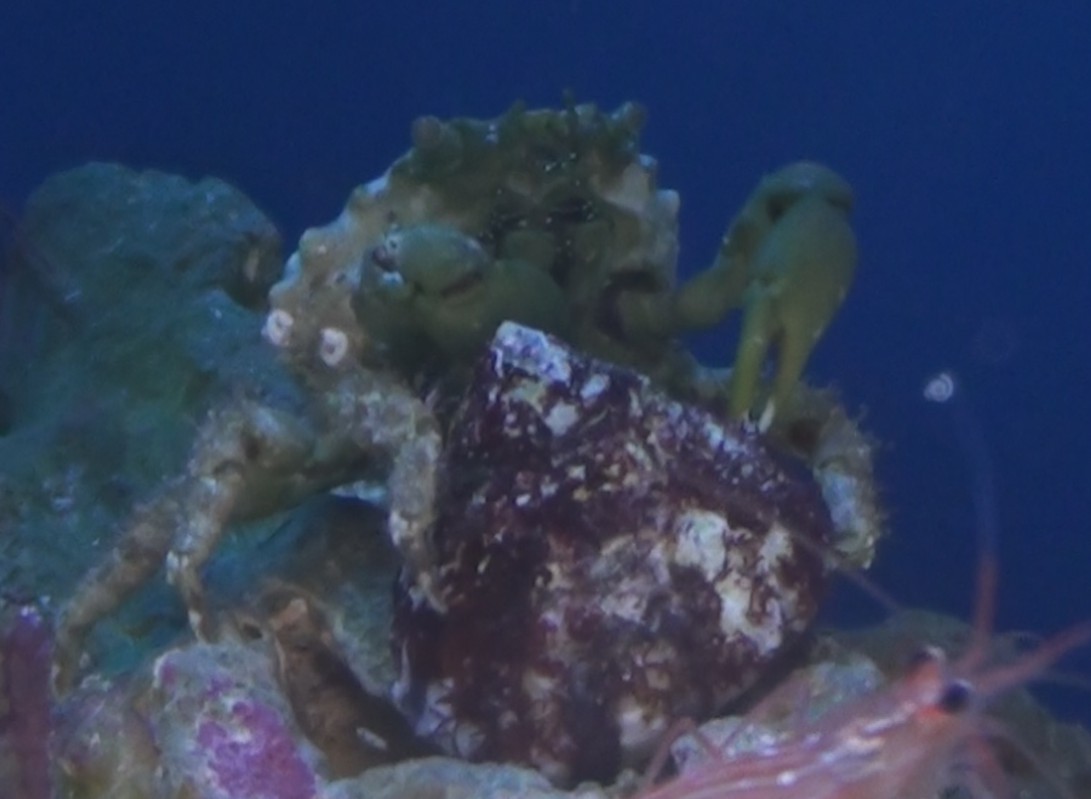
Emerald CrabFacts - Information - Picture - Video Profile of the Emerald Crab
This Profile contains interesting facts and information about the Emerald Crab species. Size: Up to 5cm Fish Tank conditions: PH 8.1 to 8.4 Diet / Feeding: Bubble Algae, Frozen, Dried or Flaked food Temperament: Peaceful, Good Addition to community tank Habitat: Rocky Sea Bed, Marine waters of Atlantic and Caribbean Behaviour: Generally Peaceful but may fight with other crabs and shrimps Range: Caribbean, Atlantic
Scientific Classification of the Emerald Crab
Definition: Scientific classification, or biological classification, is how biologists group and categorize species of organisms with shared physical characteristics. Scientific classification belongs to the science of taxonomy. Interesting Facts and Information - How do you identify the sex of a Emerald Crab?
The males and females of many fish species have different colors or different shaped bodies. But there are also other fish species where there is no visible difference. Its sometimes tricky being an ichthyologist!
Interesting Facts and Information - Why does the Emerald Crab have an Exoskeleton?
A crabs shell is an exoskeleton. An exoskeleton protects the crustacean from predators and is also used for sensing and feeding. The exoskeleton grows and hardens and is eventually shred when the carpace becomes too small. The carpace is the upper section of the exoskeleton.
Interesting Facts and Information - Why is the Emerald Crab called an Arthropod?
An Arthropod is an invertebrate animal (without a backbone) that has a segmented body with jointed limbs (appendages). True crabs are Decapod Crustaceans. Some species such as Hermit crabs, Porcelain crabs King crabs and Horseshoe crabs are not true crabs! Decapod Crustaceans have five pairs of legs, the first three are used for feeding. At the end of the limbs are the chelae which is the correct term for pincers or claws.Interesting Facts and Information about Emerald Crab
|