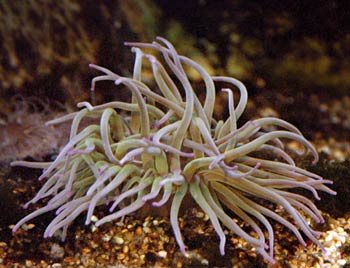
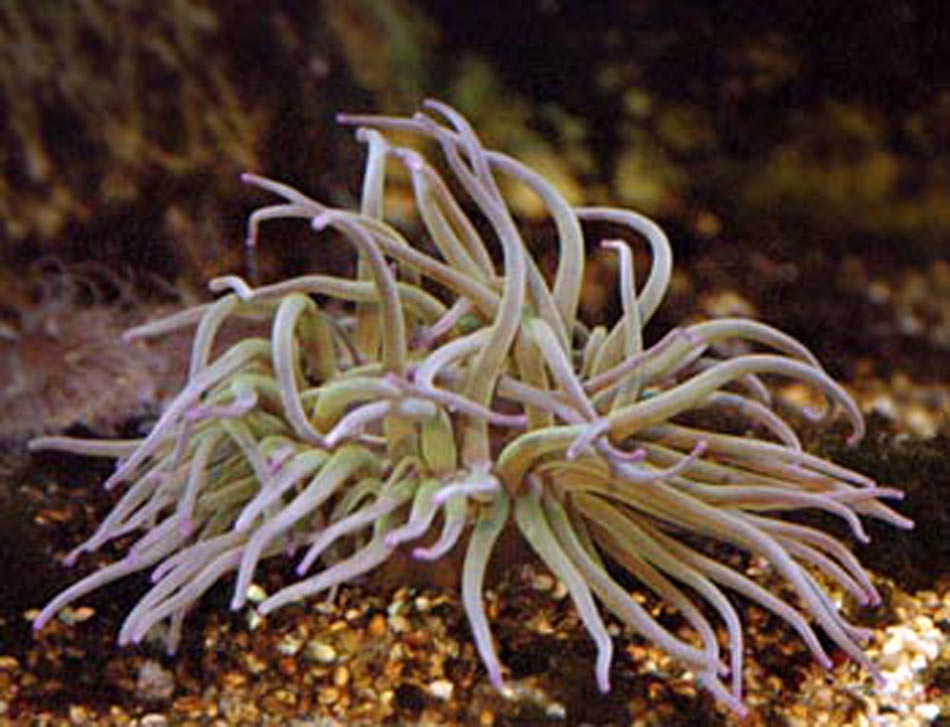
Snakelocks AnemoneFacts - Information - Video - Picture Popular Name: Snakelocks Anemone
Species: Anemonia viridis Profile of the Snakelocks Anemone
This Profile contains interesting facts and information about the Snakelocks Anemone species. Diet / Feeding: Small fish and animals which they catch in their stinging tentacles Habitat: Attach themselves to the sea bed, rocks or other submerged articles, can also attach themselves to other marine life such as Hermit Crab shells Range: Eastern Atlantic and Western Mediterranean sea
Scientific Classification of the Snakelocks Anemone
Definition: Scientific classification, or biological classification, is how biologists group and categorize species of organisms with shared physical characteristics. Scientific classification belongs to the science of taxonomy. Interesting Information about Sea Anemones
Sea Anemones are named after the Anemone flower. They are a predatory animal that releases a toxin to paralyse its prey. The prey is then moved into the anemones gastro vascular cavity. The poison secreted by a sea anemone affects fish and crustaceans. The Clown Fish or Anemonefish however has a mutually symbiotic relationship with the sea anemone, they are not affected by its poison and live among its tentacles, indeed laying their eggs on the anemone itself. The clownfish uses the sea anemone as a form of defence from larger predators.
Snakelocks Sea Anemones - Anatomy
The sea anemone has just one external opening. This single opening acts as both a mouth and an anus. All waste and undigested material is excreted through this opening. A sea anemone has no sense organs, its nervous system is very primitive but it does have nerves and muscles. The anemone doesn't have a skeleton, it keeps itself stable by closing its mouth enabling it to stay rigid.
Snakelocks Sea Anemones - Movement
Can a sea anemone move? Although sea anemones usually remain static, they can use their pedal disc to move slowly flexing their body or using their tentacles to swim slowly to another location. They can attach themselves to a rock, the sea bed or the shell of a crustacean, a hermit crab for example. A sea anemone will only move location if they are attacked by a predator or the conditions of the water are unsuitable.
Interesting Facts and Information about Snakelocks Anemone
|